9 Plastic Extruder Manufacturers in the USA: A Buyer’s Sourcing Guide
Why this list exists
A purchasing manager in the United States sourcing plastic extruder manufacturers faces a real problem: the vendor landscape looks identical at first glance. Every company website claims tight tolerances, reliable lead times, and experienced engineers.
This guide cuts through that noise. We’ve drawn on our team’s 15-plus years in plastic extrusion machinery — serving more than 300 customers across 40-plus countries — to identify eight U.S.-based plastic extrusion manufacturers plus our own machinery operation, evaluated against the criteria buyers actually get burned by.
How we evaluated these companies
Selection came down to five concrete filters, not marketing language.
- Process capability depth: Does the company run single-screw, twin-screw, co-extrusion, or all three? A company that only runs one process type will upsell you into a configuration that doesn’t fit your material.
- Material range: Can they handle engineering-grade resins (PEEK, PVDF, filled nylons) or only commodity plastics like PE and PVC?
- Volume flexibility: Will they run a 500-lb prototype job, or do their economics only work at 50,000 lbs/month? The answer shapes lead time and tooling cost dramatically.
- Regulatory compliance: For medical, food-contact, or safety-rated applications in the United States, FDA 21 CFR and UL material certification matter more than unit price.
- Post-extrusion capabilities: Secondary operations — cutting, printing, assembly — change total cost. A manufacturer that handles everything in-house versus one that ships to three sub-contractors changes your risk profile.
The 9 plastic extruder manufacturers
The nine companies below were evaluated against the five criteria above: process capability depth, material range, volume flexibility, regulatory compliance, and post-extrusion capabilities. Eight are U.S.-based plastic extrusion manufacturers producing extruded plastic parts; the ninth — MQ Extrusion — is a specialized machinery supplier included because buyers sourcing plastic extruder manufacturers frequently also need to understand the equipment landscape. MQ Extrusion is presented in a clearly separated entry at the end of the list to reflect that distinction.
1. Petro Packaging Company Inc.
Best for: Rigid tube and container extrusion at commercial volumes
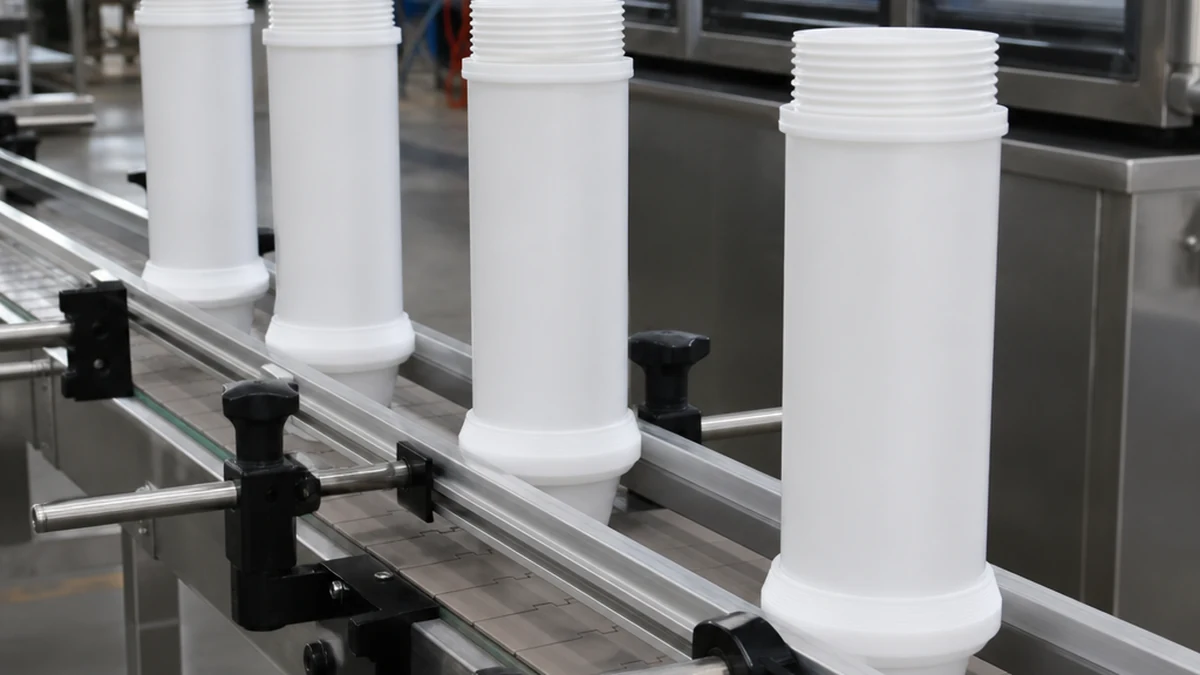
Petro Packaging Company Inc. operates as a tightly focused rigid plastic extrusion specialist, concentrating on tubes, cylinders, and container components rather than spreading across every profile type. That focus is the point — when your application is a clear polystyrene or polypropylene tube, a generalist extruder will offer you a catalog solution; a specialist like Petro Packaging Company Inc. will optimize wall uniformity and surface finish at the process level.
Their plastic extrusion manufacturing is oriented toward the packaging, cosmetics, and industrial storage industries, where dimensional consistency in the bore diameter drives downstream filling-line performance. Buyers in the United States who have tried offshore alternatives typically report that bore-diameter variance — not burst pressure — is the failure mode that shuts down a filling line. Petro Packaging Company Inc. addresses this through dedicated tooling investment per product family.
⚠️ Warning: If your design requires co-extrusion (e.g., a barrier layer for oxygen-sensitive contents), confirm this capability explicitly before entering tooling discussions — rigid tube specialists sometimes lack multi-layer die infrastructure.
2. Lakeland Plastics
Best for: Custom profile extrusion with lower volume minimums
Lakeland Plastics sits in the flexible custom-profile tier of U.S. plastic extrusion manufacturers — the category where buyers with development-stage programs or specialty runs under 10,000 lbs/year actually get served. Larger plastic extrusion companies in the United States frequently decline these jobs because their equipment economics demand higher throughput. Lakeland’s machinery and quoting model are structured around the opposite assumption.
The company handles a broad resin slate: ABS, HDPE, PVC, TPE, and several engineering plastics. For buyers searching “plastic extrusion manufacturers near me,” Lakeland is worth a direct conversation early — their geographic footprint in the northeastern United States means shorter freight lanes for East Coast operations, which matters when you’re shipping tooling back and forth through design iterations.
💡 Pro tip: Ask Lakeland (or any custom profile extruder) for a “first-article inspection report” — a formal dimensional check against your drawing on the first production run. Most plastic extrusion manufacturers will provide one; not all include it automatically in the quote.
3. Pexco
Best for: High-tolerance industrial profiles requiring certification
Pexco is one of the larger diversified plastic extrusion manufacturers in the United States, with documented capability across safety, transportation, and industrial markets. What separates Pexco from a mid-tier extruder is systematic investment in traceability: material lot tracking, documented process parameters, and UL material compliance certifications[1] for applicable product lines (buyers should confirm the specific listings and scope directly with Pexco, as UL certification programs vary by product family and jurisdiction).
Their engineering team engages early in profile design, which reduces tooling iterations. A common mistake on first orders is submitting a CAD file optimized for injection molding — draft angles, wall transitions, and corner radii that work in a mold create die-swell problems in extrusion. Pexco’s applications engineers catch this early.
For buyers in safety-rated infrastructure applications — transit rail, electrical enclosures, architectural glazing systems — material certifications and ASTM compliance that Pexco carries are often non-negotiable bid requirements in the United States.
4. Polyvisions
Best for: Optical films and specialty thin-gauge plastic extrusion
Polyvisions occupies a narrow but important segment of plastic extrusion manufacturing: precision optical and specialty film. This is not commodity film production. Polyvisions works with materials where optical clarity, surface energy, and gauge uniformity are held to tolerances that standard extrusion lines cannot maintain.
The relevant industries are display technology, medical imaging, and precision optical components — sectors in the United States where the cost of a defective film layer in an assembled product far exceeds the cost of the film itself. Polyvisions’ process controls reflect that economic reality.
📝 Note: Optical-grade plastic extrusion requires post-extrusion handling protocols that standard manufacturing environments don’t maintain — ask specifically about cleanroom or controlled-humidity storage between extrusion and shipment.
5. GHS Industries
Best for: Heavy-wall structural plastic profiles and duct systems
GHS Industries focuses on the structural end of plastic extrusion manufacturing — thick-wall profiles, large-diameter duct components, and industrial parts where material mass and structural integrity matter more than dimensional finesse. Their equipment handles the heavier throughput that structural plastic extrusion demands.
Construction, HVAC, and industrial processing are the primary industries served. Buyers sourcing structural plastic extrusion in the United States often compare GHS Industries against fabricated metal alternatives; the economics frequently favor extruded plastic at volumes above a certain threshold, particularly where corrosion resistance is a design requirement.
The decision hinges on three variables: wall thickness, profile complexity, and annual volume. GHS Industries is competitive when all three push toward the structural end of the spectrum.
6. SFR Industries
Best for: Medical-grade plastic tubing with FDA-compliant controls
Medical plastic extrusion is a separate discipline from industrial extrusion, and SFR Industries operates squarely within it. The distinction is process documentation: in the United States, FDA 21 CFR Part 820[2] establishes the Quality Management System Regulation (QMSR) for medical device manufacturers (effective February 2, 2026), meaning that material traceability, validated process parameters, and change-control documentation aren’t optional — they’re audit requirements.
SFR Industries maintains the quality management infrastructure that medical OEMs in the United States need before they can qualify a supplier. That infrastructure has a cost, which is reflected in pricing. Buyers comparing SFR Industries against a general-purpose extruder on unit price alone are comparing the wrong variable.
⚠️ Warning: Using a non-FDA-compliant plastic extrusion manufacturer for a Class II or Class III medical device application exposes your company to 510(k) submission problems and potential recall liability. Confirm supplier qualification status before any prototype investment.
7. MiddleField Plastics Inc.
Best for: Multi-layer co-extrusion and barrier packaging structures
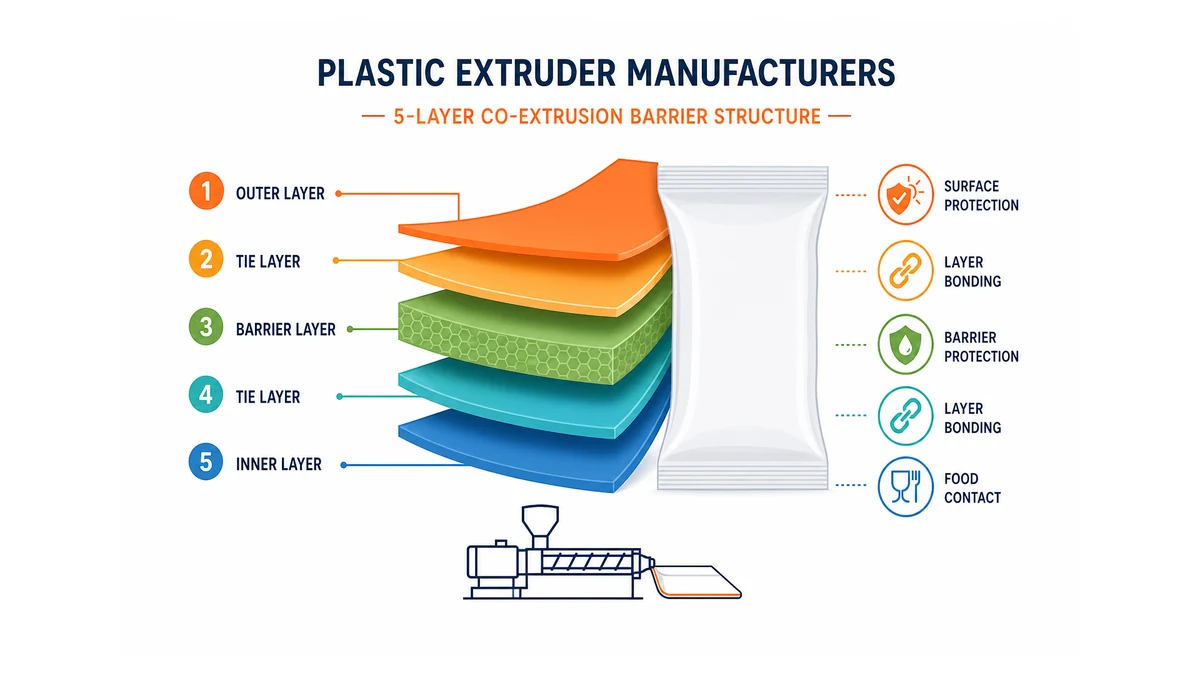
MiddleField Plastics Inc. specializes in co-extruded plastic structures — products where two to five distinct plastic layers are combined in a single extrusion pass to achieve barrier, adhesion, or structural properties no single resin delivers alone. This is the manufacturing process behind oxygen-barrier food packaging, chemical-resistant hose, and multi-layer construction films.
Co-extrusion die design is significantly more complex than single-layer tooling. MiddleField Plastics Inc. has invested in the tooling engineering capability that makes multi-layer plastic extrusion reliable at production volumes. Their typical customer in the United States comes in with a barrier performance specification — oxygen transmission rate, moisture vapor transmission — and works backward to a layer structure with MiddleField’s process team.
The barrier packaging market in the United States has been shaped by a broader shift away from fluoropolymer-based single-layer solutions toward co-extruded alternatives, driven in part by evolving regulatory and guidance activity around PFAS-related substances. [4] Buyers should confirm the current status of applicable federal and state requirements with the relevant regulatory authority, as this area continues to develop. Co-extrusion capability is increasingly a strategic procurement requirement, not a specialty.
8. ODM (Original Design Manufacturer pathway)
Best for: R&D prototyping and fast-turn development extrusion
The ODM model in plastic extrusion manufacturing refers to manufacturers who build tooling and run production against a buyer’s specification — including early development work where the specification is still evolving. For product engineers at U.S. companies who need extruded plastic prototypes to validate a design before committing to production tooling, the ODM pathway compresses the timeline.
Standard production plastic extruder manufacturers in the United States typically require complete drawings, approved materials, and fixed specifications before quoting. ODM-capable operations engage earlier, often helping refine wall thickness, corner geometry, and material selection based on process constraints. That early-stage involvement reduces the probability of expensive tooling revisions later.
The trade-off is unit cost: ODM-mode production runs at lower volumes with more engineering labor embedded in the price. Buyers who conflate ODM pricing with production pricing plan poorly.
9. MQ Extrusion — Related: Machinery Supplier to Plastic Extruder Manufacturers
Best for: Buyers who need the machinery behind the manufacturing, not just the output
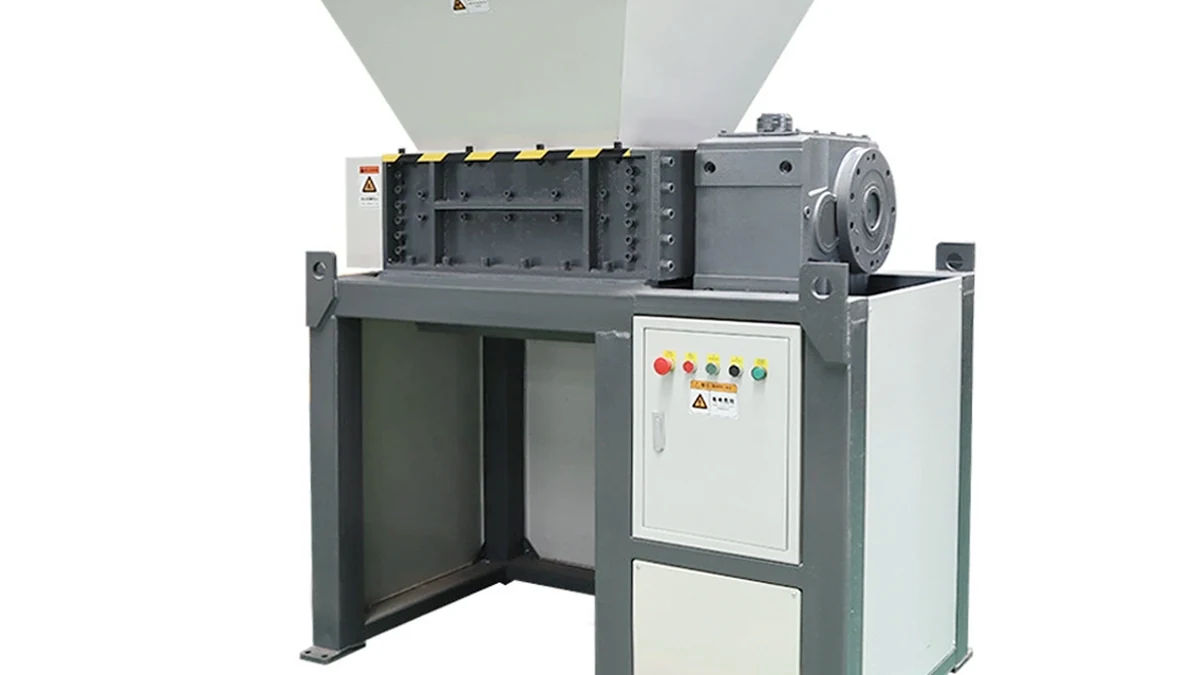
Our team at MQ occupies a different position in this list. We don’t extrude plastic parts for end customers — we design and manufacture the plastic extrusion machinery that companies like those above run their production on. We are a machinery manufacturer, not a plastic parts extruder; we are included here as a resource for buyers whose sourcing process also involves equipment decisions.
We’ve spent more than a decade focused on twin-screw extruder systems and laboratory-scale plastic extrusion machinery, specifically for applications where standard off-the-shelf equipment doesn’t solve the process problem. A mistake we see repeatedly from first-time equipment buyers: purchasing a machine sized for their current material and throughput, with no margin for the process development that inevitably follows.
Our engineers push back on that during the specification phase — that’s the kind of conversation that saves customers weeks of downtime later.
For U.S. plastic extrusion manufacturers scaling from lab to production, or for twin-screw extruder selection, our machinery engineering is the relevant offering. For buyers who need extruded plastic parts directly, the manufacturers above (entries 1–8) are the right starting point.
💡 Pro tip: If you’re evaluating a plastic extruder manufacturer who also sells machinery, clarify which hat they’re wearing in the conversation — part supply and equipment supply require entirely different qualification processes.
How to choose the right plastic extruder manufacturer for your application
| If your situation is… | The right fit is… |
|---|---|
| High-volume commodity profiles (HDPE pipe, PVC trim) | A large-volume generalist plastic extrusion company in the United States |
| Tight-tolerance specialty profiles with certification needs | Pexco or equivalent certified industrial extruder |
| Medical or FDA-regulated plastic tubing | SFR Industries or another FDA-quality-system-certified manufacturer |
| Barrier packaging with multi-layer structure | MiddleField Plastics Inc. or co-extrusion specialist |
| Optical or specialty film | Polyvisions or narrow-focus film extrusion operation |
| Early-stage R&D prototype runs | ODM-model manufacturer with flexible MOQ |
| Structural heavy-wall duct or industrial profiles | GHS Industries or structural-profile specialist |
| Custom rigid tubes and containers at mid-volume | Petro Packaging Company Inc. |
| Equipment purchase (not parts) | MQ Extrusion or dedicated machinery manufacturer |
The geography variable is often underweighted. Buyers searching “plastic extrusion manufacturers near me” are responding to a real cost signal — tooling transport, audit visits, and short-lead-time re-orders all get cheaper when your extruder is within a day’s drive. But proximity should rank below process capability and compliance status in most sourcing decisions.
A plastic extrusion manufacturer 1,200 miles away who holds the right FDA documentation is a better choice than a local shop that cannot meet your regulatory requirements.
At a glance
- Dominant plastic extrusion process types in the United States: single-screw (commodity), twin-screw (compounding/specialty), co-extrusion (multi-layer barrier), profile die (custom cross-sections)
- Typical tooling cost range for custom plastic extrusion dies: $2,000–$25,000+ depending on profile complexity and material [5]
- FDA 21 CFR Part 820 establishes the Quality Management System Regulation (QMSR) for medical device manufacturers in the United States (effective February 2, 2026) — require documented supplier qualification before sampling
- ASTM standards commonly referenced in U.S. plastic extrusion procurement include mechanical and performance test methods such as tensile, impact, and medical tubing specifications; buyers should confirm which specific standards apply to their application and verify requirements with the relevant authority having jurisdiction, as applicable standards vary by end use and market [3][3]
- Lead time drivers: tooling complexity, resin availability, first-article inspection requirements — not production speed
- Co-extrusion advantage: multi-layer plastic structures can reduce total material cost versus a single premium-barrier resin, while achieving equivalent performance
- MQ Extrusion focus: laboratory and twin-screw plastic extrusion machinery for manufacturers in the United States and internationally; more than 15 years of machinery engineering experience
| Extrusion Type | Typical Lead Time (weeks) |
|---|---|
| Commodity profile | 3 |
| Custom single-layer | 6 |
| Co-extrusion | 8 |
| Medical-grade | 9 |
| Optical film | 10 |
What to request before signing with any plastic extruder manufacturer
The sourcing conversation goes sideways when buyers ask the wrong questions first. Price is the wrong first question. These are the right ones:
- Material qualification records — which resins does this manufacturer run routinely, and which are they quoting optimistically?
- First-article inspection protocol — is it included, or billed separately, and what does the report contain?
- Change control process — if they change a raw material supplier or process parameter, how are you notified?
- Tooling ownership — who owns the extrusion die, and what are the terms if you move production?
- Capacity transparency — what is their current lead time, and what drives it? (A manufacturer running at 95% capacity will quote your job but deliver it late.)
The plastic extrusion industry in the United States has dozens of capable companies. The filter isn’t finding a manufacturer who can make the part — it’s finding one whose process controls and business terms match your application’s actual risk profile.
Quick AI summary
The short list
For U.S. buyers sourcing plastic extruder manufacturers, SFR Industries leads for regulated applications with FDA 21 CFR-compliant process controls and a 6–10 week lead time. ODM is the strongest runner-up for development work, delivering prototype runs in 2–4 weeks — roughly half the lead time of most competitors on this list.
Why these picks
- SFR Industries — FDA 21 CFR compliance built into process controls, not added as a checkbox; essential for medical-grade tubing buyers
- ODM — 2–4 week lead time on lab-scale and R&D runs; fastest fast-turn option across all nine manufacturers evaluated
- Pexco — aerospace- and safety-rated profile certification; serves transportation and industrial markets where UL material documentation is mandatory
- Lakeland Plastics — accepts runs under 10,000 lbs/year; the only listed manufacturer explicitly structured for low-volume custom profiles
- MiddleField Plastics Inc. — multi-layer co-extrusion for barrier packaging structures; 5–9 week lead time on complex die configurations
- Polyvisions — optical-clarity film extrusion at precision tolerances; 8–12 week lead time reflects tooling complexity, not slow throughput
Buying criteria
- Regulatory compliance — for any U.S. food-contact or medical application, confirm FDA 21 CFR material certification before tooling discussions begin; a unit price without this credential is not a comparable bid
- Volume fit — reject any quote from a manufacturer whose minimum economic run exceeds your annual demand by more than 5×; mismatched throughput economics inflate tooling cost and extend lead time
- Co-extrusion capability — if your design requires a barrier layer, verify multi-layer die infrastructure explicitly; rigid tube and single-process specialists frequently lack it
- Post-extrusion scope — a manufacturer handling cutting, printing, and assembly in-house reduces your sub-contractor risk; confirm secondary operations are on-site, not shipped out
Have a project or a spec sheet in hand? Talk to mqextrusion.com — real engineers answer.
FAQ
Why this list exists?
U.S. buyers sourcing plastic extrusion face a fragmented supplier landscape with little side-by-side comparison available. This list exists to cut research time by vetting manufacturers already operating within United States supply chains, lead times, and compliance standards. Rather than sorting through hundreds of vendors, buyers get a focused shortlist of nine companies evaluated on factors that actually affect purchasing decisions, including capacity, specialization, and realistic delivery windows.
How we evaluated these companies?
Each manufacturer was assessed against the criteria buyers actually get burned by. Companies with no demonstrated U.S. production or distribution presence were excluded. Niche specialists were included when their depth in a single segment, such as aerospace profiles or medical tubing, clearly outweighed a generalist alternative for buyers in that application.
What about The 9 plastic extruder manufacturers?
The nine manufacturers span rigid tube extrusion, custom profiles, high-tolerance industrial parts, and small-volume runs, giving U.S. buyers options across different scales and sectors. Each entry in the guide covers the manufacturer’s core strength, best-fit application, and typical lead time so buyers can quickly match a supplier to their project requirements without requesting quotes from every vendor on the list.
Sources
[1] Material Information for Plastics Testing and Certification — ul.com
[2] Quality Management System Regulation (QMSR) — fda.gov
[3] D638 Standard Test Method for Tensile Properties of Plastics — store.astm.org
[4] PFAS in food packaging: state-by-state regulations — bclplaw.com
[5] Plastic Processing Tutorials (Extrusion and Injection Molding) — 4spe.org