How to choose the proportion of glassfiber? About PA GF Compounding
PA GF Compounding
The core of selecting the glass fiber content of PA6 and PA66 modified materials is to maintain the optimal balance between strength, toughness, heat resistance, and cost.
30% fiberglass content is the mainstream choice in the market because it has achieved a recognized optimal balance in these key performance aspects.
Mechanical properties
- 10% -15% GF: Moderate tensile and bending strength, good toughness (especially notch impact strength), limited improvement in comprehensive mechanical properties.
- 20% -30% GF: The tensile/bending strength and modulus are significantly improved, and the impact strength can reach its peak at 30%, meeting the needs of most structural components.
- 40% -50% GF: The strength, stiffness, and modulus are extremely high, but the material becomes brittle, the toughness significantly decreases, and the impact strength sharply decreases.
→PA6-GF30 Tensile strength:160 – 190 MPa
→ PA6-GF15 tensile strength:~118 MPa
→ PA66-GF30 tensile strength: 180-210 MPa
→ PA66-GF15 tensile strength: 120-150 MPa
→PA6-GF30 Gap impact strength:8-12 kJ/m²
→ PA6-GF40 notch impact strength:~13 kJ/m ²
→PA66-GF30 Modulus:8.5 – 10.5 GPa
→ PA66-GF15 modulus: 5-7 GPa
→ PA66-GF30 reaches peak impact strength
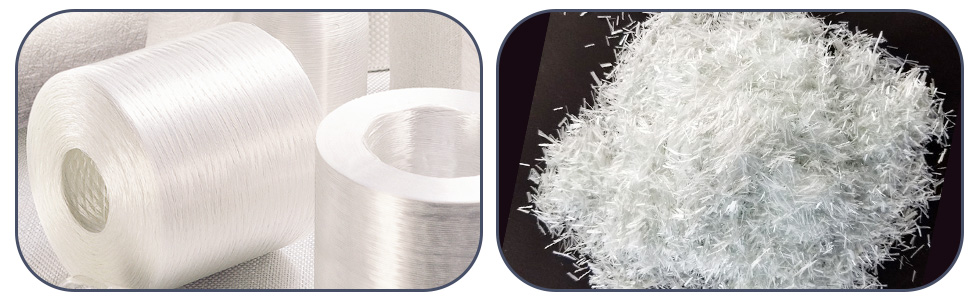
Thermal performance
- 10% -15% GF: The increase in heat distortion temperature (HDT) is limited, higher than pure nylon but lower than high-content modified materials.
- 20% -30% GF: Significant improvement in HDT (PA66-GF30 can reach above 250 ° C), excellent dimensional stability.
- 40% -50% GF: HDT and long-term use temperature reach a very high level, with extremely low coefficient of thermal expansion (CLTE) and the most stable size.
→ PA66-GF30 hot deformation temperature:>250 ° C
→ PA6-GF30 hot deformation temperature: 200-220 ° C
→ PA66-GF15 hot deformation temperature: 220-240 ° C
→ PA6-GF50 hot deformation temperature:~210 ° C
Processing and appearance
- 10% -15% GF: Good melt flowability, easy to fill molds, smooth surface of products, and minimal wear on molds.
- 20% -30% GF: The fluidity is still acceptable, the processing difficulty is moderate, and there may be “floating fibers”, which will increase the wear of the mold.
- 40% -50% GF: Poor fluidity, difficult processing, rough surface of the product, severe floating fibers, and very serious wear on the mold.
→ PA6-GF15 density:~1.21 g/cm ³
→ PA6-GF30 density:~1.38 g/cm ³
→ PA6-GF50 density:~1.56 g/cm ³
Step 2: Determine the fiberglass content range based on application requirements
After understanding the basic performance data, you can follow the following steps to accurately match your needs:
- Light load, heavy appearance, complex structure: 10% -20% GF (Performance priority: toughness, appearance, cost.)
- Comprehensive balance and universal structural components: 30% GF (mainstream choice) (Performance priority: strength, rigidity, dimensional stability, cost-effectiveness.)
- Extreme load, high precision, harsh heat resistance: 40% -50% GF and above (Performance priority: rigidity, strength, heat resistance, creep resistance.)
Step 3: Comparison of PA6 vs. PA66 material selection
After determining the glass fiber content (such as 30%), you still need to make a final choice between PA6 and PA66. The core differences between the two are as follows:
- Mechanical properties: PA66-GF30 has higher tensile strength and bending modulus, and stronger rigidity. PA6-GF30 has higher notch impact strength and better low-temperature toughness.
- Thermal performance: PA66-GF30 has a higher thermal deformation temperature and usage temperature, making it more suitable for long-term high-temperature environments.
- Chemical resistance and water absorption rate: PA6 has a higher water absorption rate than PA66, and its performance stability and dimensional accuracy in humid environments are better with PA66-GF30.
- Processing and Cost: PA6-GF30 has a lower processing temperature, better flowability, easier molding, and the raw material price of PA6 is usually lower than that of PA66.