① Ingredient Preparation
- Main ingredient: new granular material or recycled PET PP flakes (clean and fully crushed)
- Auxiliary materials: tackifier (to enhance the bonding strength of strapping), color masterbatch (to adjust the color), and other additives
- Ingredients: Mix the main ingredients and auxiliary ingredients evenly according to the specific formula
② Raw material drying (key step)
- This is the core link that determines the quality of the finished product
- PET raw materials are hygroscopic, and moisture can cause hydrolytic degradation of the molecular chain during high-temperature melting, significantly reducing their strength
- The moisture content must be controlled below 0.0025% (i.e., below 50 ppm), and it is usually processed in a hot-air dryer at 140-180℃ for 4-6 hours, or a vacuum dehumidification system is used
③ Melt extrusion and filtration
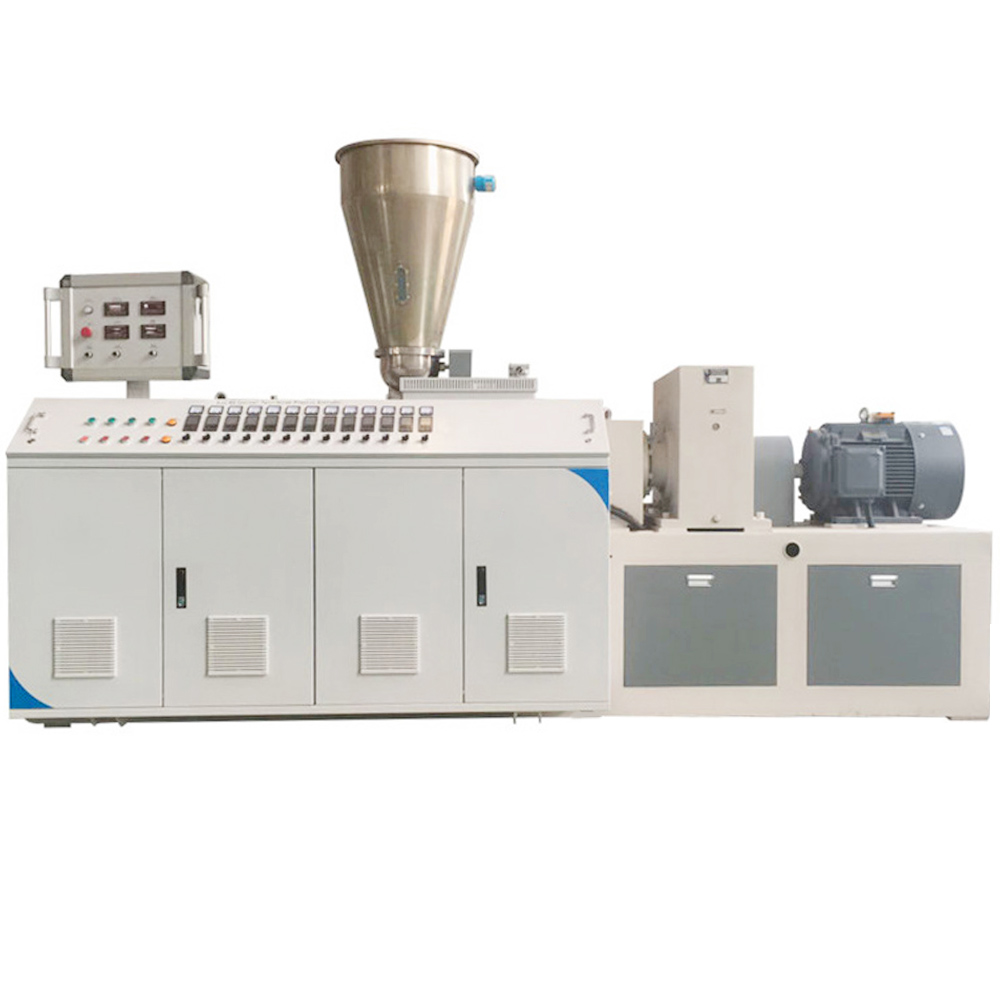
- Melt extrusion: The dried raw material enters the single screw and undergoes melt plasticization under segmented temperature control at 220-290℃ (the melting point of PET is approximately 260℃)
- Filtration: The molten material enters the filter screen changer to remove impurities. The cavity area of the filter needs to be large enough to ensure the filtration pressure value
- Forming: Extrusion through a die head mold to form a strip-shaped embryo material with a thickness of about 0.5-1.4 mm and a width of 9-32 mm
④ Cooling and forming
- The high-temperature dough strip extruded from the head quickly enters the water tank (with the temperature typically controlled at around 30℃) for rapid cooling
- Form an initial amorphous solid strip embryo, which facilitates subsequent stretching
⑤ Heating and stretching
- This is the crucial step that endows the strapping with ultra-high strength. Typically, the process of secondary longitudinal stretching is employed
- Preheating: Heat the strip with the embryo in the oven to 140-180℃ to soften it
- Stretching: Under precise temperature control, longitudinal stretching is achieved through the difference in speed between the front and rear rollers. The stretching ratio is usually 4-9 times
- Through stretching, the long-chain molecules of PET are neatly arranged and crystallized along the stretching direction, resulting in extremely high tensile strength (up to 400 MPa or more, close to steel strips of the same specification) and achieving a relatively small elongation at break (typically 5%-21%)
⑥ Embossing and heat setting
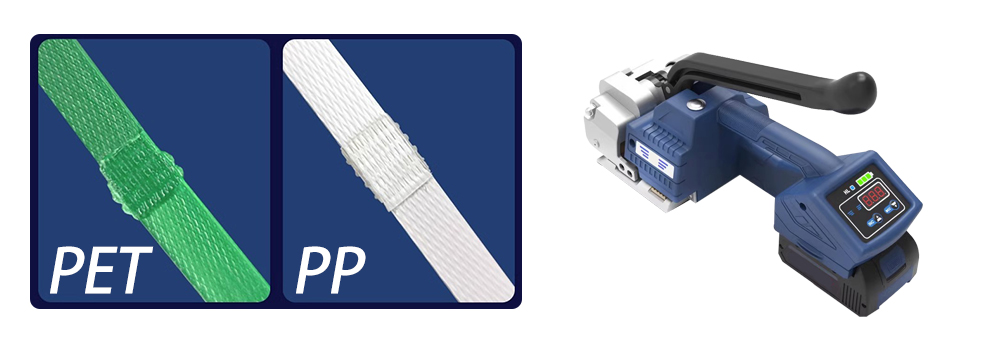
- Embossing: By using an embossing roller (with a temperature of 60-80℃ and a pressure of 0.2-0.5MPa), a diamond pattern or linear edge pattern is pressed onto the surface
- This can significantly enhance the friction during subsequent packaging operations, preventing slippage
- Heat setting (tempering): Reheating treatment in an oven under a certain tension
- To eliminate the internal stress generated during the stretching process, stabilize the dimensions, and ensure it can be used for long-term without deformation in a temperature environment of 120℃ or below
⑦ Cooling and winding
- Cooling: After being set, the packaging tape undergoes air cooling or water cooling again to solidify it fully
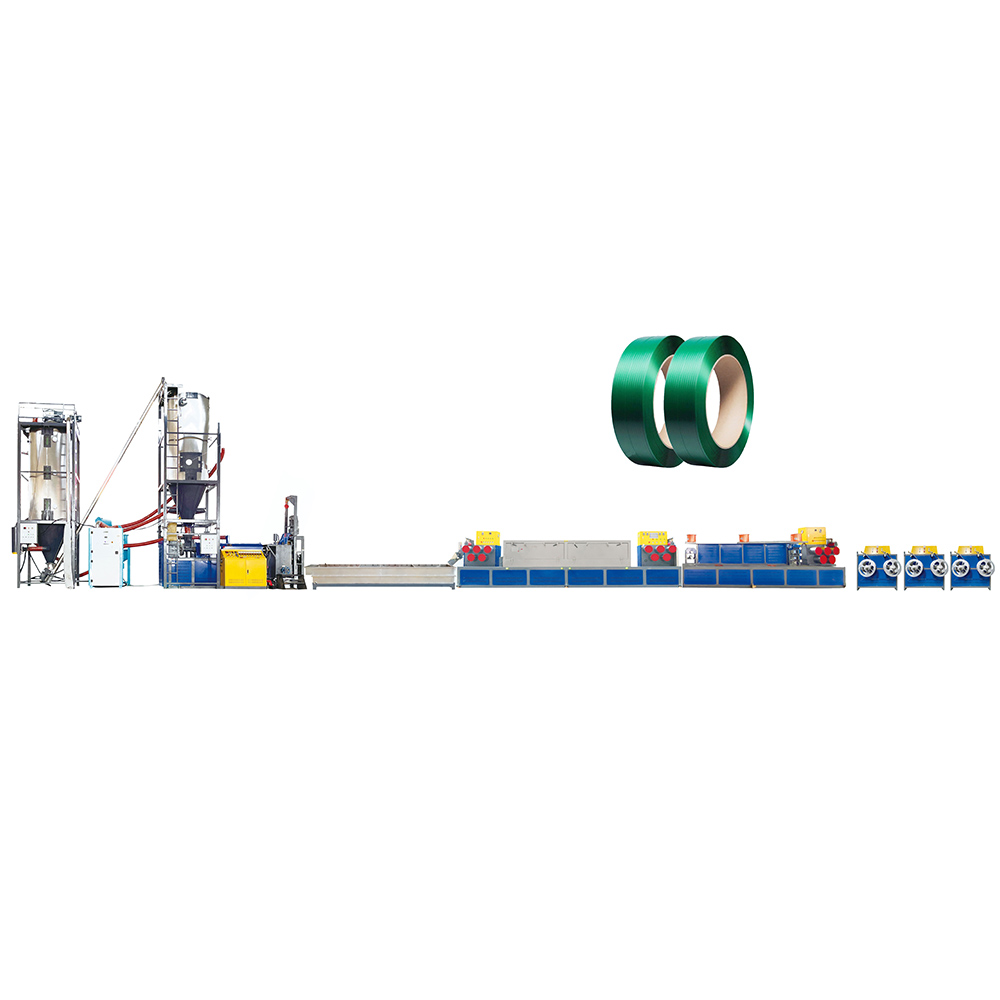
- Winding: Fully automatic winding machine – requires precise control of winding tension (0.1-0.3 MPa), and is equipped with automatic core insertion, wire arrangement, meter counting, and cutting functions
- To save on input costs, and given the low cost of labor, we will consider manual rewinding
⑧ Quality inspection and packaging
- Conduct key indicator testing on finished products, mainly including: Tensile strength: Ensure it reaches the corresponding grade (≥408 N/mm²)
- The instrument tests the elongation at break and the thickness tolerance
- Appearance inspection (check for presence of bubbles, cracks, deflection, and other phenomena)
- Qualified products, labeling, packaging, and stacking