Plastic Extruder Machine: 7 Critical Factors to Evaluate Before Buying
A procurement manager at a pipe manufacturing plant once told us he spent three months comparing specs, then ordered the wrong screw diameter anyway — because nobody had asked him what polymer he was running. A lab researcher ordered a small plastic extruder machine for R&D, received a production-scale unit, and spent a year fighting for warehouse space. Both situations are avoidable. Before evaluating any extrusion equipment for sale, you need to answer four questions: what material, what output, what profile, and what happens after delivery.
De un vistazo
| Artículo | Detail |
|---|---|
| Single-screw extruders | Best for HDPE, LDPE, PVC pipe, basic profiles; lower cost, easier to operate |
| Twin-screw extruders | Preferred for compounding, recycling, materials requiring mixing or devolatilization |
| Lab/small extruders | Screw diameters 16 mm – 45 mm; R&D, short runs, specialty materials |
| Production extrusion lines | Screw diameters 45 mm – 200 mm+; continuous 24/7 output |
| Typical U.S. price range (single-screw production unit) | $20,000 – $80,000; co-rotating twin-screw compounding lines $80,000 – $400,000+ |
| Plazo de entrega | 8–20 weeks standard; 20–36 weeks custom extrusion lines |
| Key certifications | CE marking, UL-listed electrical components, ISO 9001-certified manufacturer |
| Output range | 20 kg/hr (small lab units) to 2,000+ kg/hr (large-diameter single-screw) |
Price ranges reflect U.S. market data as cited in Plastics Technology equipment pricing surveys[1].
What is a plastic extruder machine — and what does it actually do?
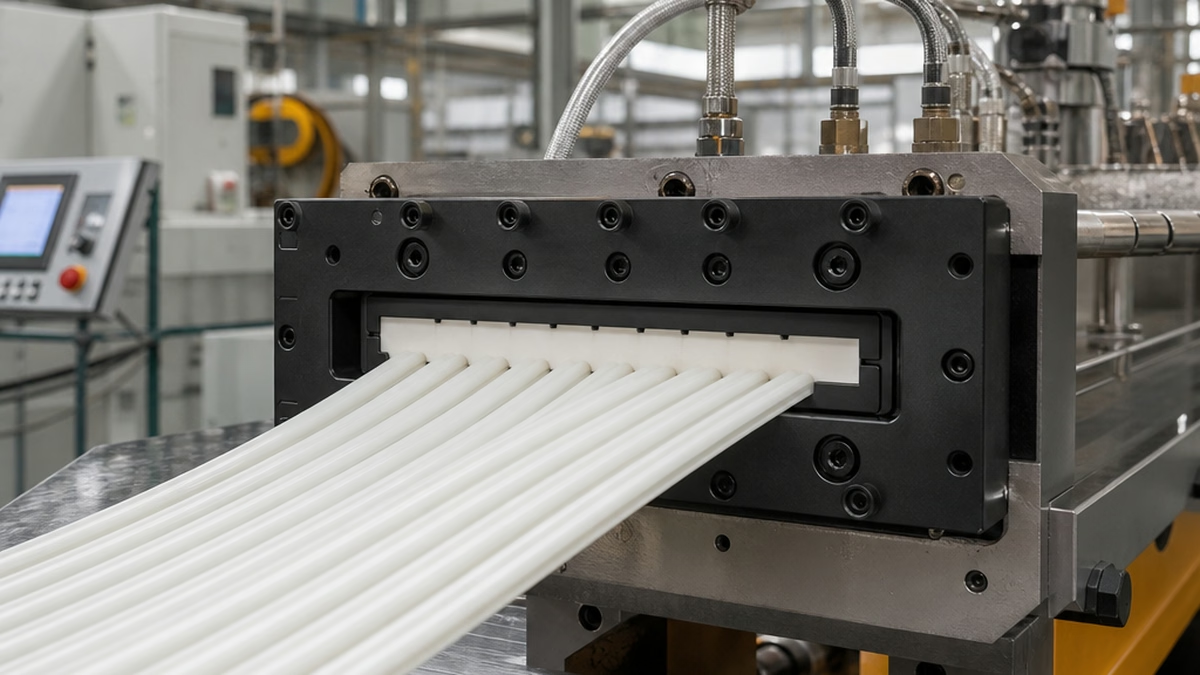
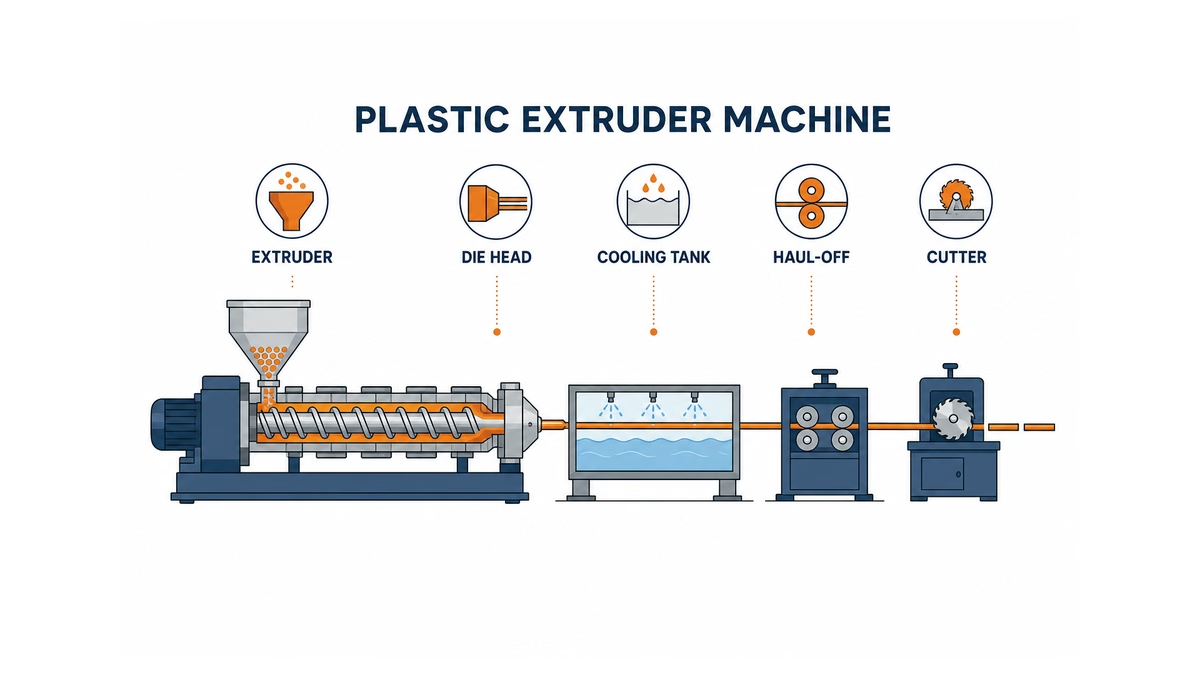
An extruder converts raw polymer pellets, powder, or regrind into a continuous, shaped output — pipe, sheet, profile, film, or compounded pellets — by melting the material and forcing it through a die. That is the complete definition. The distinction buyers sometimes miss is that the extruder is one component (screw, barrel, drive, heater bands, controls), while the extrusion line includes downstream equipment: the die head, cooling tank, haul-off, and cutter or winder. When you see a plastic extrusion machine for sale listed at a given price, check whether that price covers just the extruder or the full line.
Plastic extrusion processes an estimated 35% of all thermoplastics consumed globally[2], making it the single highest-volume plastic forming method — ahead of injection molding. For anyone evaluating equipment, that scale matters: it means more suppliers, more used units, and more application-specific variants to sort through than in almost any other equipment category.
📝 Nota: The terms “plastic extruder” and “plastic extrusion machine” are used interchangeably in the market. Technically, the extruder is the screw-and-barrel assembly; the machine or line encompasses everything from feed to cut. Clarify with any supplier which scope their quote covers.
How a plastic extruder works — and why screw geometry is the real decision
The operating principle is straightforward: polymer enters the feed hopper, an auger-style screw rotates inside a heated barrel, and friction plus conductive heat melts the material as it travels forward. Pressure builds as the melt reaches the die, which shapes the output. A downstream cooling and sizing system fixes the final geometry.
The screw is where engineering decisions concentrate. Screw geometry — compression ratio, L/D ratio (length-to-diameter), flight depth — determines melt quality, output rate, and which materials run well. A general-purpose single-screw extruder with an L/D of 24:1 handles HDPE, LDPE, and polypropylene competently. Running rigid PVC or engineering-grade polymers demands a different configuration, often a longer L/D (30:1 or higher) and barrier-flight geometry to manage shear sensitivity.
Twin-screw extruders add co-rotating or counter-rotating screws that intermesh, producing intensive mixing. This is why twin-screw extruders dominate compounding applications, recycling lines[3], and any process requiring additives, fillers, or reactive extrusion. The trade-off: twin-screw extruders cost roughly 3–5× more per unit of output capacity and demand operators with more process knowledge.
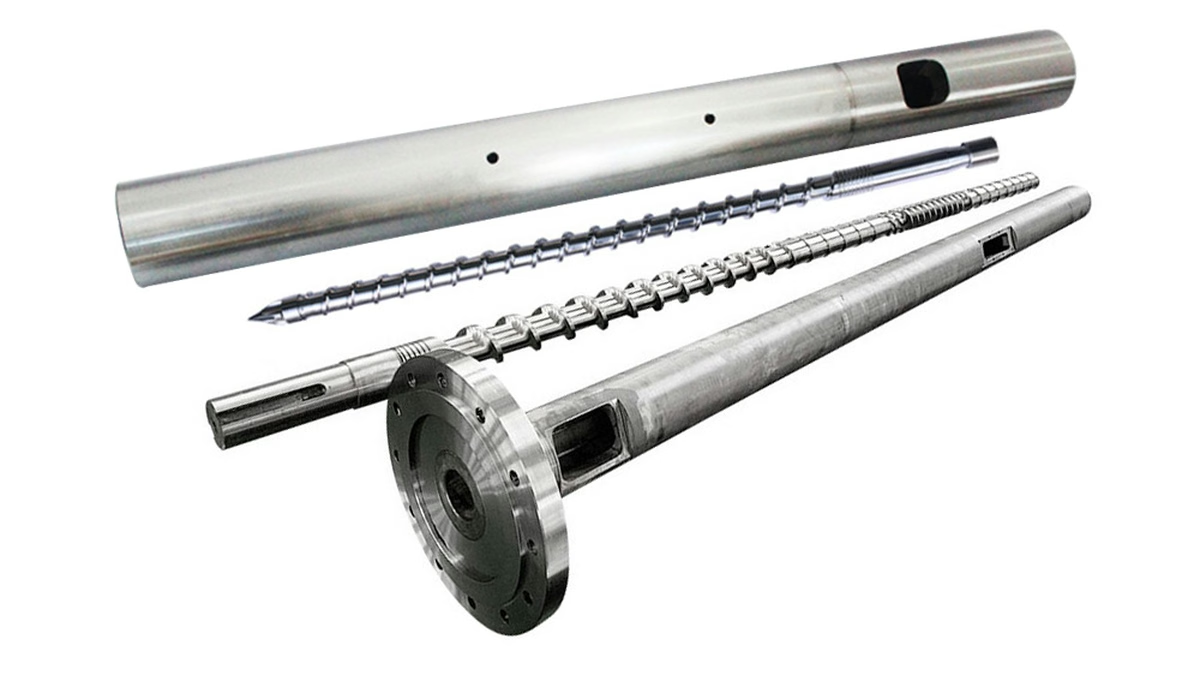
The temperature profile across barrel zones matters as much as screw configuration. Most extruders divide the barrel into three to six independently controlled zones. Getting zone setpoints wrong — even by 15–20°C — causes degradation, gels, or poor surface finish in the profile. Our engineers flag this on nearly every first commissioning visit: buyers focus on the machine spec sheet, then underestimate how much process know-how goes into dialing in the temperature curve for their specific resin.
Counterintuitively, the most experienced operators we’ve worked with run lower screw speeds than new operators — not higher. Output rate lost to a purge-and-restart costs far more than the marginal throughput gained by pushing RPM before the temperature profile stabilizes.
Single-screw vs. twin-screw: the comparison that drives most buying decisions
| Tipo | Best application | Typical screw diameter | Throughput range | Relative cost |
|---|---|---|---|---|
| Single-screw extruder | Pipe, film, sheet, basic profiles; HDPE, LDPE, PP, PVC | 30 mm – 200 mm | 20 – 2,000 kg/hr | Baseline |
| Tornillo doble co-rotativo | Compounding, masterbatch, recycling, filled polymers | 20 mm – 135 mm | 10 – 1,500 kg/hr | 3–5× single screw |
| Counter-rotating twin-screw | Rigid PVC profiles, window frames, pipe from PVC powder | 40 mm – 100 mm | 50 – 800 kg/hr | 2–3.5× single screw |
| Lab/micro extruder | R&D, formulation, small-batch specialty material | 16 mm – 45 mm | 0.5 – 30 kg/hr | Often lowest absolute price |
| Artículo | Valor |
|---|---|
| Single-screw | 2000.0 |
| Tornillo doble co-rotativo | 1500.0 |
| Counter-rotating twin-screw | 800.0 |
| Lab/micro | 30.0 |
| Tipo de extrusora | Max throughput (kg/hr) |
|---|---|
| Single-screw | 2,000 |
| Tornillo doble co-rotativo | 1,500 |
| Counter-rotating twin-screw | 800 |
| Lab/micro | 30 |
For pipe production — HDPE or PVC — a single-screw extruder is almost always the right call. The geometry is simple, the shear profile is predictable, and the lower cost lets buyers invest more in the downstream sizing and cooling section, where pipe dimensional accuracy is actually controlled. Our engineers at the lab extruder selection stage consistently find that buyers underestimate how much die and calibration tooling affects final part quality relative to the extruder itself.
For a recycling application — especially post-consumer plastic recycling extruder machine[4] work with mixed or contaminated input — twin-screw extruders earn their higher cost through melt filtration, devolatilization, and mixing capacity that single-screw machines cannot replicate.
⚠️ Advertencia: If a supplier quotes you a single-screw extruder for a compounding or filled-polymer application “because it’s cheaper,” treat that as a red flag. Running high-filler compounds through a standard single-screw unit causes accelerated barrel and screw wear — replacement costs will erase the initial savings within 18–24 months.
Extrusion lines, sheet lines, and profile systems — buying the right scope
The extruder itself rarely ships as a standalone purchase for production. Most buyers are actually procuring extrusion lines or one of their specialized variants.
Pipe extrusion lines bundle the extruder with a vacuum calibration tank, water spray cooling trough, belt haul-off, and planetary cutter. The die is specified by pipe OD and wall thickness range. Buying these components separately from different suppliers and integrating them yourself introduces compatibility risk — a mismatch between haul-off speed and extruder output creates dimensional variation that shows up as a quality failure in ASTM pressure-rated pipe[5].
Extrusion sheet lines are among the most versatile configurations. A sheet line replaces the pipe die and downstream equipment with a flat die, a three-roll polishing stack, edge trimmers, and a stacker or winder. Sheet lines produce packaging substrate, thermoforming sheet, and construction board from PP, PS, PET, and ABS.
The three-roll stack configuration — vertical, horizontal, or inclined — affects which surface finish and thickness range you can achieve. Die lip geometry and roll temperatures are the two variables that buyers most often underspecify at the quoting stage. Our team has built sheet extrusion lines spanning a wide thickness range — from thin decorative film to thick structural board — and the die and roll requirements for those two extremes share almost nothing in common. That gap is precisely why buyers need to specify their full thickness and material range upfront, not just the nominal product they’re launching with.
Profile extrusion lines produce custom cross-sectional shapes — window frames, trim strips, tubing, edge banding. The die is custom-machined for each profile, and lead time on a new die (3–8 weeks) is often the schedule constraint, not the extruder itself.
💡 Consejo de experto: When budgeting an extrusion line purchase, add 15–25% above the machine quote for installation, electrical connection, operator training, and the first production trial. Projects that budget only to the machine price almost always face a cost overrun during commissioning.
How much does a plastic extrusion machine cost?
Pricing spreads are wide enough that a single number misleads more than it helps. Here is how U.S. buyers should think about the cost structure:
| Machine type | Approximate U.S. price range | What drives the high end |
|---|---|---|
| Lab/micro single-screw extruder | $8,000 – $35,000 | Precision controls, specialized screw metallurgy |
| Production single-screw extruder (standalone) | $20,000 – $80,000 | Screw diameter, drive power, control package |
| Full pipe extrusion line (single-screw) | $45,000 – $200,000 | Pipe diameter range, vacuum calibration length, automation |
| Counter-rotating twin-screw (PVC profiles) | $80,000 – $220,000 | Screw diameter, torque rating, PLC sophistication |
| Co-rotating twin-screw compounding line | $150,000 – $500,000+ | L/D ratio, feeder count, devolatilization venting, output rate |
| Machine type | Price ceiling (USD) |
|---|---|
| Lab/micro single-screw | $35,000 |
| Production single-screw (standalone) | $80,000 |
| Full pipe extrusion line | $200,000 |
| Counter-rotating twin-screw | $220,000 |
| Co-rotating twin-screw compounding | $500,000+ |
The cost of any unit is also shaped by the control package. Basic temperature and speed controls add modest cost. A full PLC-based system with recipe storage, remote monitoring, and MES integration can add $15,000–$40,000 to an otherwise standard machine. For facilities running multiple products on one line, that investment typically pays back inside a year in reduced changeover time and scrap.
Relative to injection molding or blow molding, the capital cost for a given output rate is comparable — but extrusion’s advantage is that tooling cost is far lower. A custom pipe die runs $3,000–$15,000; an equivalent injection mold is often $50,000–$200,000. For high-volume continuous profiles, extrusion is almost always the lower-cost process per kilogram of output, which is why the category continues to attract investment in U.S. manufacturing reshoring.
7 critical factors for evaluating suppliers and extrusion solutions
The U.S. market includes domestic manufacturers, established importers, and direct-from-factory options. All three tiers can deliver good equipment — and all three have delivered problems.
Here is the practical evaluation checklist:
- Can the supplier document a screw design recommendation specific to your resin — compression ratio, L/D, flight geometry?
- What is the warranty period, and does it cover parts only, or labor and on-site service?
- Can the supplier provide references from two or three installations running the same material and profile type?
- What is the lead time for the screw-and-barrel set as a replacement wear part?
- Is the electrical package UL-listed or NEC-compliant[6] for U.S. installation?
- Does the supplier offer engineered extrusion solutions for your specific output requirement, or only standard catalog configurations?
- What commissioning support is included — remote guidance only, or an on-site engineer for first production?
The gap between a $45,000 unit that runs for a decade and one that becomes a maintenance burden inside two years has little to do with the headline motor power or output rate. In our experience, it almost always traces back to screw metallurgy selection for the specific polymer being run, or a control package that lacks the resolution to hold consistent zone temperatures. We’ve seen PVC compounding lines fail prematurely because the screw surface hardness was specified for polyolefins — a mismatch that shows up as scoring on the barrel bore within the first year, not immediately at startup.
Equipment appraisals, repairs, and storage — what buyers miss on used equipment
The used equipment market in the U.S. is active. Well-maintained extruders under ten years old typically trade at 30–60% below new-equivalent pricing, according to AMEA equipment valuation guidelines[7]. That discount is real — but so is the risk if you skip due diligence.
What a formal equipment appraisal covers
A proper appraisal from an AMEA-certified appraiser[8] goes beyond a visual inspection. The report covers barrel bore measurement (indicating wear against nominal diameter), screw flight wear measurement, motor and gearbox service history, control system functionality, and remaining economic life estimate. Appraisal costs for a single extruder unit typically run $500–$2,000 depending on machine complexity and appraiser travel. For a used twin-screw compounding line priced at $150,000, that fee is trivial.
Barrel wear tolerance matters here in precise terms. Extruder barrel wear beyond 0.5–1.0% of nominal bore diameter causes measurable output rate loss and dimensional variation that no process adjustment can compensate for. A barrel at the edge of that tolerance may still run — but it will run at degraded output and elevated scrap rate until it’s rebored or replaced. Ask for a bore measurement report as a non-negotiable condition of any used equipment purchase.
Common repair points and parts lead times
The failure modes we see most often by machine type: on single-screw extruders, heater band failures and thermocouple drift are the most frequent nuisance issues — inexpensive to fix, but problematic if spare inventory is not on hand. Gearbox oil seal failures are the most consequential on older units; a contaminated gearbox that runs hot can write off the entire drive assembly. On twin-screw compounding lines, segmented screw elements and barrel liners are the wear items — lead times for imported replacement elements can run 8–16 weeks, which is why we recommend that buyers of twin screw compounding lines establish a minimum spare-parts inventory at commissioning rather than ordering on failure. A U.S. service contract that covers labor and a defined parts kit is worth negotiating at purchase; time-and-materials billing for emergency repair on a downed production line is expensive in every direction.
We offer direct support for screw and barrel replacement on equipment we supply, with documented lead times provided at the point of sale — not discovered after the first breakdown.
Storage conditions for equipment awaiting installation
This is the detail that costs buyers money silently. Extruder barrels and screws are precision-machined components with surface finishes and bore tolerances that degrade under improper storage. Correct conditions: indoor storage at temperatures above 10°C, relative humidity below 60%, with protective oil coating on all machined surfaces and the screw supported along its full length — not resting on its flights, which causes distortion in the helix under its own weight over time.
Improper storage for six months can mean a rebore or screw reflight before the machine ever produces a single kilogram of product. On a $60,000 used line, that repair bill can run $8,000–$15,000. For equipment we supply that will be stored before installation, we provide written storage protocols and, where facilities allow, climate-controlled staging.
Operating a plastic extruder: the three variables that matter most
Operating this equipment well comes down to three interdependent variables: screw speed (RPM), temperature profile (zone setpoints), and downstream haul-off speed. Change one without adjusting the others and output will drift — in wall thickness, surface finish, or dimensional tolerance.
For operators starting on a new line, the conservative approach is to establish the temperature profile first (based on the resin supplier’s processing guide), set RPM at 60–70% of maximum, and then trim haul-off speed to achieve target dimensions. Increase screw speed only after the temperature profile has stabilized across all zones — typically 20–45 minutes from a cold start depending on barrel mass.
The most common error we see: pushing RPM to chase output before temperatures stabilize. The result is unmelt and gels in the product, followed by a purge and restart that costs more time than the attempted throughput gain saved.
We assumed this was primarily a training gap until we saw it happen with experienced operators switching from a polyolefin line to a PVC-based profile line — where the temperature sensitivity is far less forgiving. The process knowledge doesn’t always transfer the way operators expect.
If you are sizing your first extruder or scaling from a lab unit to a production line, the most useful next step is to send us your resin data sheet and target output specification. Our engineering team — which has worked across more than 40 countries and a wide range of single-screw and twin-screw extrusion solutions — will recommend a geometry and line configuration based on your actual process requirements, not a catalog default. We have found that the single most consistent source of equipment mismatch is a resin data sheet that never reached the application engineer before the order was placed. Check that your material data sheet is in the supplier’s hands before any screw design is finalized.
¿Tienes un proyecto o una ficha técnica? Ponte en contacto con mqextrusion.com: te atenderán ingenieros de verdad.
Preguntas frecuentes
What is a plastic extruder machine?
A plastic extruder machine is industrial equipment that melts raw polymer pellets or powder and forces the molten material through a shaped die to produce continuous profiles such as pipe, tubing, sheet, film, or wire coating. The core components are a heated barrel, a rotating screw, and a die. Screw design, barrel temperature zones, and die geometry are matched to the specific polymer being processed, which is why selecting the right configuration matters before purchase.
How much does a plastic extrusion machine cost?
Prices in the United States range from roughly $10,000 for a compact single-screw lab unit to well over $500,000 for a high-output twin-screw production line with downstream equipment included. A mid-range production extruder typically falls between $50,000 and $200,000. Final cost depends on screw diameter, output rate, polymer compatibility, automation level, and ancillary equipment such as cooling tanks, haul-offs, and cutters. Twin-screw extruders cost roughly 3–5× more per unit of output capacity.
Is plastic extrusion expensive?
Relative to other plastics processing methods, extrusion has a moderate upfront machine cost but a low per-unit operating cost at volume, making it economical for continuous, high-run production. Energy, raw material, and die tooling are the main ongoing expenses. For short runs or highly complex geometries, tooling costs can reduce the advantage. Most U.S. manufacturers find the process cost-competitive once monthly output justifies the capital investment.
What is the difference between extrusion and extruder machine?
Extrusion is the manufacturing process of pushing melted plastic through a die to create a continuous shape. An extruder machine is the physical equipment that performs that process. In practice, the terms are often used interchangeably in purchasing conversations, but the distinction matters when scoping a project: extrusion refers to the full process line including downstream equipment, while the extruder machine specifically refers to the barrel, screw, drive, and controls unit.
Fuentes
[1] Plastic Extrusion Machinery Market Research Report 2034 — dataintelo.com
[2] High Performance Thermoplastics Market Size — market.us
[3] Extruders & Compounding Machines — coperion.com
[4] Plastic Recycling Extruders — bausano.com
[5] Standard Specification for Poly(Vinyl Chloride) (PVC) … — store.astm.org
[6] NFPA 70 (NEC) Code Development — nfpa.org
[7] Association of Machinery and Equipment Appraisers | — amea.org
[8] Certified AMEA Appraisals — harrismachinetools.com