What is the effect of masterbatch dispersant? How to choose dispersing agent?
Regarding masterbatch dispersant
In the actual production process of masterbatch, there is a prominent industry pain point: most inorganic fillers (such as calcium carbonate, talcum powder, carbon black, etc.) have hydrophilicity, while polymer carriers such as polyethylene and polypropylene are mostly hydrophobic. The two naturally have compatibility differences and are prone to agglomeration of fillers.
Choosing the appropriate dispersant can effectively improve the compatibility between the two, alleviate agglomeration problems, and enhance the uniformity of the masterbatch and product quality.
The function of dispersants
1 Wetting stage
Dispersants bind to the surface of fillers through their own hydrophilic groups, replacing water molecules on the surface of fillers, reducing the interfacial tension between fillers and polymer carriers, allowing carriers to fully wet filler particles, and improving mixed dispersion.
2 stages of dispersion
During the process of melt mixing and mechanical shearing, the hydrophobic groups of the dispersant are well compatible with the polymer carrier, dispersing the agglomerated filler particles into small single particles that are evenly dispersed into the carrier system, ensuring that the filler is evenly distributed in the masterbatch.
3 Stable Stage
The dispersant adsorbs onto the surface of the dispersed filler particles, forming a protective film to prevent small particles from agglomerating again, ensuring that the masterbatch maintains a stable dispersed state during subsequent processing and storage, and guaranteeing uniform performance of the masterbatch.
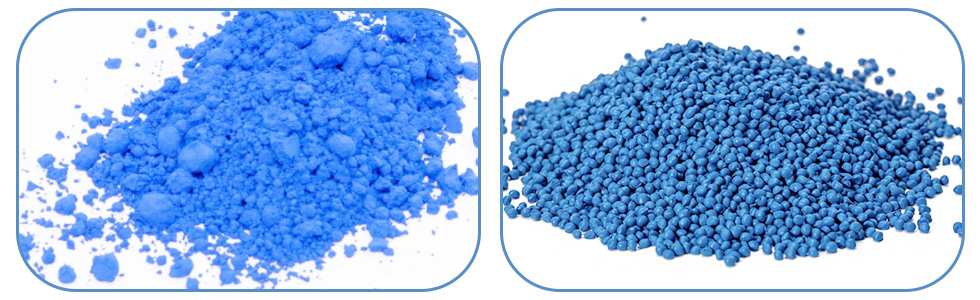
To adapt to the corresponding type of masterbatch dispersant, three core requirements must be met:
One is compatibility, which requires good compatibility with both fillers and polymer carriers to avoid problems such as delamination and precipitation during the preparation process, which may affect the quality of the masterbatch
The second is dispersion efficiency, which can achieve a good dispersion effect at a lower addition amount (usually 0.5% -3% of the total amount of masterbatch) and reduce costs.
The third is stability, which does not decompose or evaporate in the high-temperature and high-shear environment of masterbatch processing, and can maintain the dispersion effect for a long time.
Selection of dispersants for different masterbatch types
1 Fill the masterbatch
The production of filling masterbatch mainly consists of inorganic fillers such as calcium carbonate and talc powder, with the core requirement of reducing costs and improving processing performance.
It is recommended to choose fatty acid and stearic acid salt dispersants. These dispersants are inexpensive, have moderate dispersion efficiency, can effectively solve the problem of filler agglomeration, and have good compatibility with polyolefin carriers, making them suitable for large-scale production.
2 Color masterbatch
The core requirements of color masterbatch are uniform color, colorless dots, and a small color difference. The choice of dispersant directly affects the dispersion effect and color expression of the powder.
It is recommended to choose polyolefin wax and amide dispersants. These dispersants have excellent compatibility with color powders and polymer carriers, and can evenly disperse color powders into small particles, avoiding color spots and lines. At the same time, they can improve the color transfer stability of color masterbatch and ensure consistent color of end products.
3 Functional masterbatch
The core requirement of functional masterbatch (such as flame retardant masterbatch, anti-static masterbatch, antibacterial masterbatch) is to achieve specific functions, and the selection of dispersants should take into account both dispersion effect and functional synergy.
For example, in flame retardant masterbatch, the dispersant needs to be well compatible with flame retardants (such as magnesium hydroxide, aluminum hydroxide) to avoid affecting the flame retardant effect; In anti-static masterbatch, the dispersant needs to work synergistically with the anti-static agent to ensure uniform dispersion without weakening the anti-static performance. It is recommended to choose specialized dispersants or polyether or polyester dispersants with good compatibility with functional additives.
********
In the practical implementation of systematic decentralized processes, MQ has been deeply involved in the masterbatch and advanced functional modified materials industry for many years, providing you with energy-saving and efficient mechanical equipment and masterbatch production technology.