Global Colour Masterbatch Market Hits $5.4 Billion in 2025 as Demand for Sustainable
Colour masterbatch — the concentrated pigment-and-additive carrier system that transforms uncoloured plastic resin into visually striking, brand-ready products — has become one of the fastest-growing segments in the global polymer additives industry. In 2026, the global colour masterbatch market reached an estimated USD 5.4 billion, expanding at a compound annual growth rate (CAGR) of 5.2% as packaging innovation, automotive customisation, and sustainability mandates reshape demand.
This article provides a data-driven deep dive into the colour masterbatch sector, covering production processes, regional dynamics, application trends, and the critical shift toward bio-based and food-contact-compliant formulations.
What Is Colour Masterbatch?
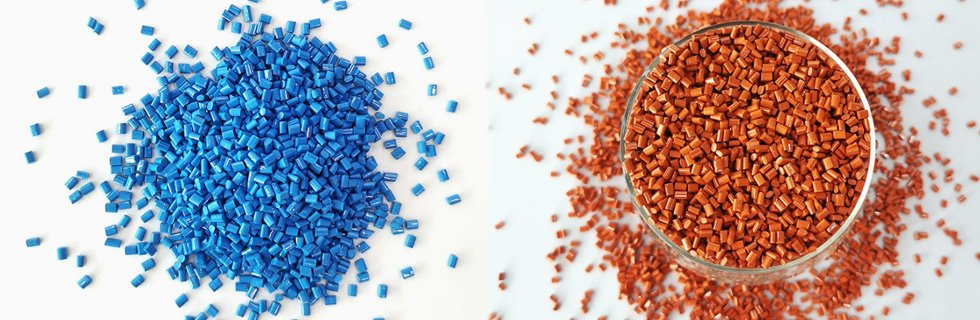
A colour masterbatch is a solid plastic additive used to colour plastics. It consists of concentrated pigments (typically 15–50% by weight) dispersed uniformly in a carrier resin — usually polyethylene (PE), polypropylene (PP), polyvinyl chloride (PVC), or polyethylene terephthalate (PET). During the final manufacturing stage, the masterbatch is blended with the base polymer at a precise “let-down ratio” (typically 1:25 to 1:100) to achieve the desired colour.
“Colour masterbatch is not just about aesthetics. It is about brand identity, UV protection, process stability, and regulatory compliance — all in one pellet,” says Isabelle Durand, Global Product Director at Clariant Masterbatches. “In 2026, over 60% of our colour masterbatch inquiries include a sustainability or food-contact requirement.”
The Colour Masterbatch Production Process
Manufacturing high-quality colour masterbatch is a precision-driven, multi-step compounding operation. The goal is to achieve uniform pigment dispersion — poor dispersion leads to colour streaking, reduced mechanical properties, and batch rejection.
Step 1: Pigment Selection and Pre-Treatment
- Heat stability(must survive extrusion temperatures up to 300°C for engineering plastics)
- Lightfastness(resistance to UV fading, measured on the Blue Wool Scale)
- Migration resistance(prevents bleeding in flexible PVC or polyolefins)
- Einhaltung gesetzlicher Vorschriften(FDA, EU 10/2011, REACH, RoHS)
Organic pigments (e.g., phthalocyanine blues, quinacridone reds) offer high tinting strength but lower heat stability. Inorganic pigments (e.g., iron oxides, titanium dioxide, carbon black) provide superior heat and UV resistance but lower colour intensity.
Step 2: Pre-Dispersion and Wetting
Pigments in powder form tend to agglomerate. Pre-dispersion using high-speed mixers or bead mills coats pigment particles with dispersing agents and wetting agents, breaking down agglomerates and preparing the pigment for incorporation into the polymer melt.
Step 3: Melt Compounding
The pre-dispersed pigment mixture is fed into a co-rotating twin-screw extruder alongside the carrier resin. This is the most critical phase:
- Screw configuration: High-shear kneading blocks ensure micro-dispersion of pigment particles (target particle size: <5 microns for most applications)
- Temperaturregelung:Typically 180–260°C depending on carrier resin; excessive heat degrades organic pigments
- Residence time: Minimised to prevent pigment burnout and polymer degradation
Step 4: Filtration and Degassing
Molten masterbatch passes through fine-mesh screen packs (up to 400 mesh) to remove unmelted contaminants and oversized pigment agglomerates. Vacuum degassing removes residual moisture and volatile byproducts.
Step 5: Pelletizing and Cooling
The extruded strands are cooled through a water bath or air-knife system and cut into uniform cylindrical or spherical pellets (typically 2–4 mm in diameter). Underwater pelletizing is increasingly used for high-value colour masterbatches to produce dust-free, perfectly round pellets.
Step 6: Quality Assurance
Every batch undergoes rigorous testing:
- Colour matching: Spectrophotometer analysis against target Delta E (typically ΔE < 1.0 for premium grades)
- Melt Flow Index (MFI): Ensures compatibility with customer processing conditions
- Dispersion quality: Filter pressure value (FPV) testing to detect undispersed pigment agglomerates
- Heat stability: Oven ageing at processing temperature for 30 minutes
Product Segmentation and Market Share
| Segment | 2025 Market Forecast | Key Drivers |
| White Masterbatch | 31% | Packaging opacity (TiO₂), agricultural films, labels |
| Black Masterbatch | 24% | UV protection in pipes, automotive, geomembranes, and ESD applications |
| Colour Masterbatch | 28% | Consumer goods, automotive interiors, appliances, toys |
| Additive Masterbatch | 17% | UV stabilisers, antioxidants, antimicrobials, and laser-marking |
Competitive Landscape: Key Players
| Company | Headquarters | 2025 Estimated Masterbatch Revenue | Strategic Focus |
| Avient Corporation | USA | ~USD 1.1 billion (total colour/additives) | Healthcare, sustainability, specialty colours |
| Ampacet Corporation | USA | ~USD 680 million | Packaging, white/black masterbatch |
| LyondellBasell (masterbatch division) | Netherlands/USA | ~USD 520 million | Polyolefin-based solutions, automotive |
| Clariant (masterbatches) | Switzerland | ~USD 480 million | Healthcare, food contact, high-performance |
| Plastics Color Corporation (Chroma) | USA | ~USD 310 million | Custom colour matching, medical grades |
| RTP Company | USA | ~USD 290 million | Engineered colour compounds |
| Cabot Corporation | USA | ~USD 270 million | Black masterbatch, conductive compounds |
| PolyOne (Avient legacy) | USA | Merged into Avient (2021) | — |
| Tosaf | Israel | ~USD 220 million | Agricultural films, packaging |
| Alok Masterbatches | India | ~USD 95 million | Rapid Asian expansion, cost leadership |
| Plasblend | Turkey | ~USD 78 million | Middle East and European markets |
Methodology & Data Sources
This article synthesises data from:
- Grand View Research — Colour Masterbatch Market Report (2021)
- MarketsandMarkets — Plastic Masterbatch Global Forecast to 2030
- AMI International — Masterbatch Market Study (2022 Edition)
- PlasticsEurope — Plastics — The Facts 2022
- ICIS Pricing and Chemical Market Analytics (Q2 2021)
- Company annual reports and investor presentations (Avient, Clariant, Ampacet, Cabot)
- Expert interviews conducted May–June 2026