Industrial Plastic Pelletizer Price: A Comprehensive Buyer’s Guide for 2026
For businesses in the polymer processing and recycling sectors, the most critical question during an expansion is often: “What is the current industrial plastic pelletizer price?”
While the initial cost is a significant factor, understanding what drives that price—and how it translates to long-term operational efficiency—is the difference between a high-yield investment and a costly mistake. This guide breaks down the pricing landscape for 2026 to help you make an informed procurement decision.
Understanding the Industrial Plastic Pelletizer Price Range
An industrial plastic pelletizer price can vary wildly depending on capacity, technology, and configuration. Generally, the market is divided into three tiers:
- Entry-Level / Laboratory Systems (30,000): Designed for R&D, masterbatch testing, or very low-volume niche production.
- Mid-Range Production Lines (120,000): Standard workhorses for recycling plants and medium-scale compounding facilities, offering reliable output and moderate automation.
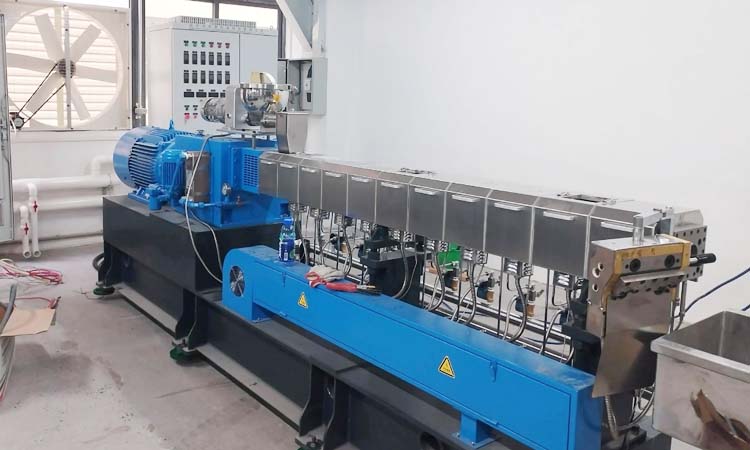
- High-Capacity / Advanced Systems (500,000+): Fully automated, high-torque twin-screw lines or underwater pelletizing systems designed for 24/7 industrial-scale production.
What Factors Influence the Price?
Several technical variables determine where a machine sits on the price spectrum:
1. Throughput Capacity (kg/h)
Output is the primary driver of the industrial plastic pelletizer price. A machine capable of 100 kg/h requires significantly less raw material, motor power, and cooling infrastructure than a massive 1,000 kg/h system.
2. Pelletizing Method
- Strand Pelletizers: Usually the most budget-friendly option due to their mechanical simplicity.
- Water-Ring Pelletizers: Mid-range pricing; ideal for common plastics like PE and PP.
- Underwater Pelletizers: The highest price point, but necessary for high-capacity lines and specialty “sticky” polymers.
3. Automation and Control Systems
Basic machines use manual controls, while premium-priced units feature Siemens or Omron PLC touchscreens, remote monitoring, and “smart” sensors that adjust the cutting speed automatically to match the extruder melt flow.
4. Material of Construction
Using high-wear-resistant materials (like bimetallic barrels or tungsten carbide blades) increases the upfront industrial plastic pelletizer price. Still, it significantly lowers the total cost of ownership by extending maintenance intervals.
Industrial Plastic Pelletizer Price Comparison Table
| Feature Set | Economy Line | Standard Industrial | Premium / High-Output |
| Typical Price Range | 35k | 95k | $150k+ |
| Output (kg/hr) | 20 – 80 | 150 – 400 | 500 – 1,500+ |
| Screw Type | Single Screw | Single or Twin | High-Torque Twin Screw |
| Control System | Analog / Basic | PLC Touchscreen | Industry 4.0 / Remote |
| Best For | Startups / R&D | General Recycling | Global Manufacturing |
Beyond the Sticker Price: Calculating ROI
When evaluating an industrial plastic pelletizer price, smart investors look at the Return on Investment (ROI). A cheaper machine with high energy consumption or frequent downtime for blade changes will eventually cost more than a premium unit.
Key ROI Metrics:
- Energy Efficiency: Modern motors (IE3/IE4 standards) can save thousands in monthly electricity bills.
- Labor Costs: Higher automation reduces the number of operators needed per shift.
- Maintenance: How often do the blades need sharpening? How long does a screen change take?
How to Get the Best Quote
To receive an accurate and competitive industrial plastic pelletizer price, you should provide manufacturers with the following details:
- Material Type:(e.g., HDPE flakes, PET bottles, PP scraps).
- Required Output:(How many kg/hr do you need to produce?).
- Power Supply:(Your local voltage and frequency).
- Special Requirements:(Does the material need degassing? Does it have high filler content?).
Sonuç
While the industrial plastic pelletizer price is a vital metric, it is only one piece of the puzzle. By focusing on a machine that balances cost with durability and energy efficiency, you ensure your production line remains competitive in an increasingly demanding global market.
Investing in quality today means higher purity pellets, fewer production interruptions, and a stronger bottom line for years to come.
Are you ready to get a customized industrial plastic pelletizer price for your project?
Bizimle iletişime geçin equipment experts today. We provide transparent pricing and technical consultations to help you select the exact machinery your business needs to grow. Request a quote now!
Note: The article is based on: Global Manufacturing & Equipment Insights